
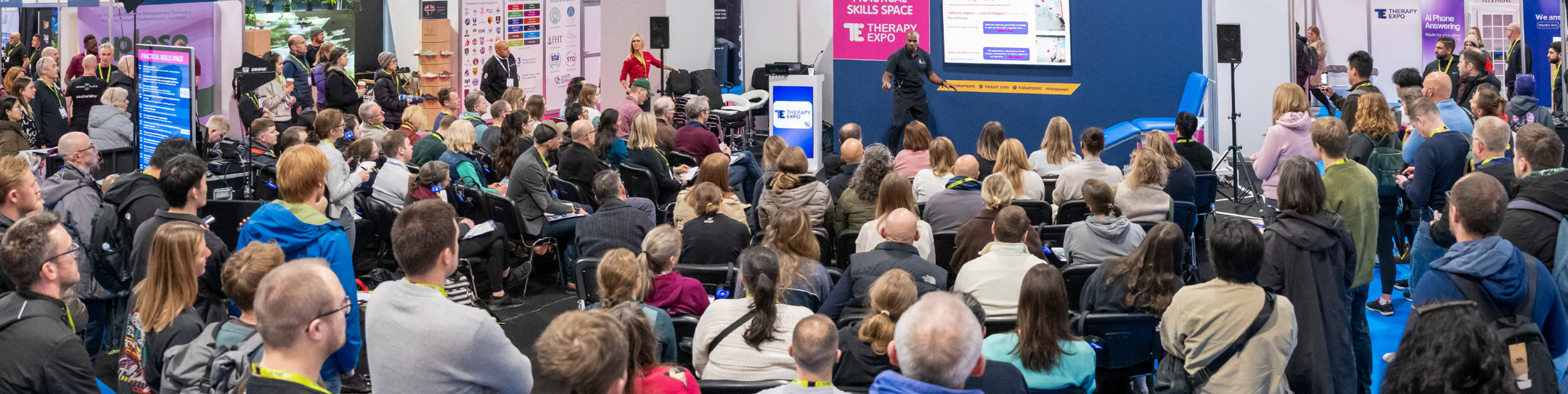
Explore the 2026 Conference Programme
Explore The Therapy Show conference programme and be at the forefront of musculoskeletal (MSK) health, movement, and recovery. Gain practical insights from clinicians, researchers and performance specialists covering the latest evidence, technologies and approaches shaping therapy practice.
Download PDF programme preview
We're sorry, but we couldn't find any results that match your search criteria. Please try again with different keywords or filters.
Loading
Theatre A
-
At 17, Thomas Robson-Kanu suffered two serious cruciate ligament injuries that required surgery and left him facing severe pain, inflammation and the possibility that his professional football career ...
-
David’s presentation will consider the latest evidence based approaches for the management and rehabilitation of concussion. How using advanced technologies in ISEH can support clinical diagnosis, to ...
-
- Understanding perimenopause and menopause exercise challenges - Strength training for bone health and metabolic changes - Muscles and fat infiltration: underneath the layers are hidden dangers – how ...
-
Kinesiology taping has been used clinically for nearly 50 years but the evidence base supporting it looks very different today than it did when many clinicians first learned to tape. So, what has actu ...
-
Chronic widespread pain can be caused by a variety of diagnosis, well beyond Fibromyalgia or Rheumatological conditions. This session covers what else can lead to chronic widespread pain, how to diffe ...






Venn Innovations in Shockwave Theatre

-
Explore four clinical cases demonstrating the wider potential of shockwave therapy, with practical insights into treatment approaches, device capabilities and how to get more from your shockwave machi ...
-
Learn how ultrasound can inform the assessment and targeted application of shockwave therapy for tennis elbow and distal biceps tendinopathy, supporting accurate treatment planning and clinical decisi ...
-
Develop practical skills in the safe and effective application of shockwave therapy, with a focus on treatment techniques, patient positioning and protocols for plantar fasciitis.
-
Explore the features and clinical applications of the MASTERPULS® Icon, with practical guidance on translating its technology into effective patient treatment.
-
Develop practical skills in using ultrasound to identify common shoulder pathologies and guide appropriate shockwave therapy treatment and management.
-
Explore proximal ITB syndrome as an often-overlooked cause of lateral hip pain, including differential diagnosis, structured assessment and the integration of diagnostic ultrasound and focused shockwa ...






Theatre B

-
Low back pain in youth athletes is most commonly caused by a lumbar bone stress injury rarely seen in adults. We will explore the symptoms and risk factors to enable early recognition and appropriate ...
-
AI is going to save the world - enhanced quality, productivity, efficiency, cost-effectiveness, climate change, world peace, reincarnation of dinosaurs, living under water, and life on Mars. Wait. Is ...
-
This talk will examine similarities and differences between adolescent and adult PFP. It will also explore similarites and differences between adult non-OA and OA PFJ problems. Evidence will underpin the talk together with Claire's clinical practice working exclusively in the patellofemoral field for the last 20 years. Claire will also reference and draw on her own published research and how this may influence clinical practice.
-
Building on last year’s message that children are not small adults, this session will use real‑world cases to illustrate how early recognition influences outcomes in paediatric MSK presentations. We w ...
-
Understand the demands on the pelvic floor and abdominal wall with the transition into and beyond pregnancy Understand best practice for prevention and management of pregnancy associated disorders inc ...
-
Hidden in plain sight: the biopsychosocial impact of breast weight Stowed away for too long: where posture & alignment fit in With forgiveness from Aristotle, how the whole can be greater than the sum ...






Business and Practice Leadership Theatre
-
Walk away knowing exactly how to turn today into real growth & not just another day of passive learning.Leave with the confidence to start conversations you normally avoid and realise you're not the o ...
-
 Is your clinic generating more revenue each year, yet leaving you with less profit than you expected?Many established clinic owners assume that using self-employed associates is the safest and easiest ...
 -
 Most clinic owners judge their marketing on how busy the month felt. In clinic the model is baseline, intervention, re-assessment; marketing is rarely held to that standard. This session applies objec ...
 -
 You're constantly answering questions, solving problems and making decisions. Your team is growing, but everything still seems to come back to you.If taking a proper holiday feels impossible or your c ...
 -
Many clinic owners work incredibly hard but still lack confidence when it comes to understanding their financial performance. Your profit and loss statement is far more than a document for your accoun ...
-
Building a successful clinic isn't just about employing good people—it's about creating an environment where they can thrive. Strong leadership, a positive culture and effective systems are what turn ...
-
 Your therapists are clinically great, yet patients still stop attending sooner than they should, and you are sick of seeing gaps!In this practical session, Katie Bell shares the simple consultation an ...
 -
• How to tell the difference between education that builds real clinical value and education that mainly sells certainty, status, or branding • The key questions to ask before booking CPD, including w ...


Applied Practice Arena
-
This presentation provides an evidence based overview of scar management, combining current research with practical clinical application. Attendees will explore the physiology of scar formation and healing, the potential impact scars can have on pain, function, movement, and quality of life and the importance of recognising scar related dysfunction. The session will cover effective assessment techniques, treatment options, and emerging approaches to scar rehabilitation, with a particular focus on postnatal and surgical scarring. Drawing on clinical experience and current PhD research, the presentation will highlight recent developments in the field and discuss how clinicians can integrate scar management into everyday practice. Attendees will leave with greater confidence in assessing and treating scars to improve patient outcomes.
-
 In today's evidence-driven healthcare environment, objective measurement is becoming essential for effective clinical decision-making. This session explores how clinicians can use data-driven assessme ...
 -
 Discover how the Lojer Manuthera 242 Mobilisation Table helps therapists work more safely, precisely and effectively. This practical demonstration will explore spinal decompression, mobilisation and a ...
 -
 LESS IS MORE. Work smarter, not harder. Let the singing bowls do the work. Take also care of yourself while treating your clients, customers, loved ones. Make your life easier, integrate high-therapeu ...




The Therapy Exchange
-
Women's health is an integral part of musculoskeletal and sports medicine, yet pelvic health, endometriosis and menopause are often overlooked in everyday clinical practice. This practical, case-based ...


Clinical Skills Lab
-
Chronicity of pain is common and complex and means that treatment does not always lead to change in pain experience. Supporting patients towards long-term symptom management in the context of a life w ...
-
Many behaviour change techniques exist, but they are not all equal or should be used at the same time. This session covers what you can do to increase the odds your patient starts their rehab plan, an ...
-
An interactive session introducing a coaching-based approach to clinical sessions.
-
A practical approach to clinical reasoning using a real case Learn how to structure exercise prescription in an evidence informed way Learn how strength and conditioning and physiotherapy principles ...
-
-
*An interactive session for understanding complex, unclear and multifactorial paediatric MSK presentations. *Case‑based clinical reasoning: talking through a scenario step‑by‑step to explore what we d ...
-
 This presentation explores Magnetic Resonance Therapy (MBST) as an innovative, non-invasive treatment approach in musculoskeletal (MSK) medicine. Bridging cellular science and clinical practice, it re ...
 -
There is so much 'noise' about testing... and rightly so! Objective data provides clarity, motivation and direction for therapists and patients... but there are hundreds of tests so which ones should ...
-
Strength gains don't require a fully equipped gym. This highly interactive, 90% practical session will show you how to effectively apply the principles of progressive overload using minimal equipment in both rehabilitation and performance settings. You'll learn what progressive overload is, why it's essential for strength and hypertrophy, and how patient response—not just the exercise prescription—should guide your clinical decision-making. Through live demonstrations and hands-on practice, you'll explore exercises that can be easily progressed or regressed, helping you confidently adapt training to the individual in front of you. By the end of the session, you'll have a clearer understanding of strength training dosage, practical progression strategies, and simple ways to challenge patients with limited resources. Expect plenty of movement, discussion, and real-world application in a fun and engaging learning environment.
-
Session highlights Visual and vestibular systems help organise posture, tone, balance and movement These systems are relevant far beyond dizziness care Simple screening can reveal important missing pi ...



The Studio
-
Take advantage of the opportunity to complete practical CPR refresher training while attending Therapy Show 2026. Attendance for this session is by booking only. To book, click this link.
-
Take advantage of the opportunity to complete practical CPR refresher training while attending Therapy Show 2026. Attendance for this session is by booking only. To book, click this link.
-
Take advantage of the opportunity to complete practical CPR refresher training while attending Therapy Show 2026. Attendance for this session is by booking only. To book, click this link.
-
Take advantage of the opportunity to complete practical CPR refresher training while attending Therapy Show 2026. Attendance for this session is by booking only. To book, click this link.
-
Take advantage of the opportunity to complete practical CPR refresher training while attending Therapy Show 2026. Attendance for this session is by booking only. To book, click this link.
-
After a busy day exploring the Therapy Show, this relaxed 30-minute stretching session offers the perfect opportunity to unwind, reset and ease tired muscles. The session will guide attendees through ...

Theatre A
-
The limits of pain science in real world MSK-practice depends on how science-based you want to be When people adopt a scientifically-aligned understanding of their problem, outcomes seem better People ...
-
By the end of this talk, the attendee will be able to spot the incentives behind wellness claims; recognize marketing tricks of the trade; use a bespoke screening tool to evaluate the interventions fo ...
-
Join Ben as he peeks behind the curtain of if and how exercise helps people with back pain. Using the latest high quality research, this talk will….. Which type of exercise is the best for treating ...
-
 Sub-acromial pain remains one of the most common, contested and clinically challenging presentations in musculoskeletal practice. In this live Physio Matters Podcast, Jo Gibson and Jack Chew interroga ...
 -
Share learnings and reflections from Paris 2024 Paralympic Games Complex problem solving with para athletes - share some case studies LA 2028 what are we putting in place strategically and operational ...
-
This session explores why traditional rehabilitation approaches may fall short for hypermobile patients and introduces evidence-informed strategies for safer, effective rehabilitation. Attendees will leave with a deeper understanding of hypermobility and connective tissue disorders, and evidence-informed tools to support rehabilitation outcomes.


Venn Innovations in Shockwave Theatre
-
Explore the features and clinical applications of the MASTERPULS® Icon, with practical guidance on translating its technology into effective patient treatment.
-
Explore four clinical cases demonstrating the wider potential of shockwave therapy, with practical insights into treatment approaches, device capabilities and how to get more from your shockwave machi ...
-
Explore the effective use of shockwave therapy in tendinopathy, highlighting the factors that support successful outcomes and the common pitfalls to avoid.
-
Develop practical skills in the safe and effective application of shockwave therapy, with a focus on treatment techniques, patient positioning and protocols for plantar fasciitis.
-
Explore proximal ITB syndrome as an often-overlooked cause of lateral hip pain, including differential diagnosis, structured assessment and the integration of diagnostic ultrasound and focused shockwa ...
-
Learn how ultrasound can inform the assessment and targeted application of shockwave therapy for tennis elbow and distal biceps tendinopathy, supporting accurate treatment planning and clinical decisi ...
Theatre B
-
Spine Related Leg Pain: Current Conundrums and Future Directions A keynote lecture exploring the current challenges and common frustrations in managing spine related leg pain, practical ways clinician ...
-
Current understanding of tendon injury aetiology, diagnosis and the relationship with load. Practical approaches to load management and tendon capacity development in both active and inactive individu ...
-
Pain erects a brick wall between us and the outside world. At the same time, it prevents us from breaching that wall by communicating the experience to others. This presentation will explore the chall ...
-
This session will address the most up to date evidence and clinical thought on the best assessment and management of people with head and neck pain. Case studies will be used to highlight key clinical ...
-
This keynote is designed as a practical, accessible session for physiotherapists, sports clinicians and multidisciplinary teams. The session will help attendees make sense of why some clients recover, adapt or progress differently, even when their training or rehabilitation plan appears well matched. It will introduce awareness of nutrigenomics, stress physiology and trauma-informed practice as additional layers for understanding recovery, resilience and performance. The emphasis will be on practical insight, professional reflection and thoughtful integration within existing rehabilitation, resilience and performance frameworks.


Business and Practice Leadership Theatre
-
In healthcare, we often separate good clinical practice from good business. In reality, the most successful practices understand that they are inseparable. This session explores how putting the patien ...
-
 Most clinic owners did not set out to become full-time admin firefighters. In this session, Ben Boulter explores why modern healthcare practices need better systems, not more workarounds. Drawing on 2 ...
 -
• What professional standards actually are, and why they matter more than badges, buzzwords, and popularity • How qualifications, CPD, professional associations, registers, and scope of practice fit t ...
-
 AI can do far more than write clinical notes. Jonathan Boxall, osteopath and founder of MSK Software, explores how AI can turn everyday clinic data into better strategic decisions, identify where team ...
 -
Artificial intelligence is already beginning to influence the way musculoskeletal care is delivered, from triage and documentation to education, clinical decision support and patient self-management. ...


Applied Practice Arena
-
We’ll explore why the part that matters most is the part we assess least. Most women will experience pelvic floor dysfunction — making this a majority issue in your caseload. Over half your patients a ...
-
Caesarean birth is a major abdominal surgery and, with rates now reaching almost half of UK births, exercise professionals are increasingly likely to work with clients recovering from a caesarean. In ...
-
 Discover how the Lojer Manuthera 242 Mobilisation Table helps therapists work more safely, precisely and effectively. This practical demonstration will explore spinal decompression, mobilisation and a ...
 -
For application within clinical or gym-based settings, learn how to use simple functional screening assessments to prescribe effective mobility and strength exercises that optimise rehabilitation outc ...
-
Proposed new aetiology of Morton's neuroma Clinical audit data to demonstrate how joint manipulation impacts MN RCT data showing how manipulation compares to steroid injection


The Therapy Exchange
-
Within this session experiences from the Northern Ireland healthcare setting with be shared to inform the discussion
Clinical Skills Lab
-
Session highlights Pain is not a simple damage meter Movement is an output of the nervous system Sensory input, prediction and threat shape movement quality Neuroscience supports broader, better rehab ...
-
Musculoskeletal (MSK) practice is shaped by a set of often unspoken norms — sensory, cognitive, communicative, and relational — that tend to favour neurotypical ways of thinking and interacting. For m ...
-
The Problem with Current Approaches: Why traditional falls prevention programs only address 50% of the problem - focusing solely on prevention while ignoring what happens when prevention fails The Fou ...
-
The most uncomfortable question in running rehab: “Am I ready to run again?” For many clinicians, return-to-run decisions still become: • trial and error • fingers crossed • educated guesswork Which ...
-
A practical approach to clinical reasoning using a real case Learn how an assessment and management framework is used to manage a complex patient case Learn how strength and conditioning and physioth ...
-
Discover a framework to decode the shoulder: actor, reactor, or mastermind of movement Integrate the principles of biotensegrity with biomechanics to advance movement understanding Enjoy a dynamic, mi ...
-
In this session, Orla will provide an overview of Motivational Interviewing (MI) and how it applies to your everyday practice. Along with a colleague, she will demonstrate the use of MI in a brief con ...
-
With an estimated 2 million people in Great Britain using weight loss injections, understanding their potential impact on bone density, muscle mass, strength and pain is vital for clinicians. New research is constantly emerging. This talk will go beyond the headlines to explore how weight loss injections can impact bones, muscles and joints and why this matters for patients and the care of their musculo-skeletal system. The mechanisms for this and how it differs from traditional weight loss methods will be discussed. As well as drawbacks, research on potential benefits for joint and cardiovascular health, how this differs from traditional weight loss methods and why maintaining muscle mass is crucial for weight loss therapy efficacy and weight management will be presented. Practical information on how to maintain and improve bone density, muscle strength, joint pain and metabolic health whilst using weight loss injections will also be presented.


The Studio
-
Take advantage of the opportunity to complete practical CPR refresher training while attending Therapy Show 2026. Attendance for this session is by booking only. To book, click this link.
-
Take advantage of the opportunity to complete practical CPR refresher training while attending Therapy Show 2026. Attendance for this session is by booking only. To book, click this link.
-
Take advantage of the opportunity to complete practical CPR refresher training while attending Therapy Show 2026. Attendance for this session is by booking only. To book, click this link.
-
Take advantage of the opportunity to complete practical CPR refresher training while attending Therapy Show 2026. Attendance for this session is by booking only. To book, click this link.
-
Take advantage of the opportunity to complete practical CPR refresher training while attending Therapy Show 2026. Attendance for this session is by booking only. To book, click this link.

)
)
)
)
)
)
)
)
)
)