
Why are so many experienced therapists changing the way they mobilise tissue?
)
Ask experienced therapists how their approach to tissue mobilisation has evolved and an interesting pattern often emerges.
Most started with their hands.
Then perhaps came manual tools, cupping or other forms of negative pressure. Each can add something different. But as clinicians gain experience, the questions they ask often change too.
How precisely can I control what I'm doing? Can I reproduce it? Can I adapt it to different tissues and different patients? And could I achieve more without simply working harder with my hands?
What is interesting is where many highly experienced clinicians eventually arrive.
Today, LymphaTouch is used by hundreds of UK clinicians, across more than 70 NHS organisations and within six Premier League football clubs. Hannah Poulton and Emma Holly, both speaking at Therapy Show this year and leading educators in scar therapy, also use LymphaTouch in their own clinical practices every day.
Different clinicians. Different patients. Different settings. Yet a surprisingly similar progression.
So what are they finding that makes them move beyond the techniques and tools they were already using?
For many, the answer is greater precision and control.
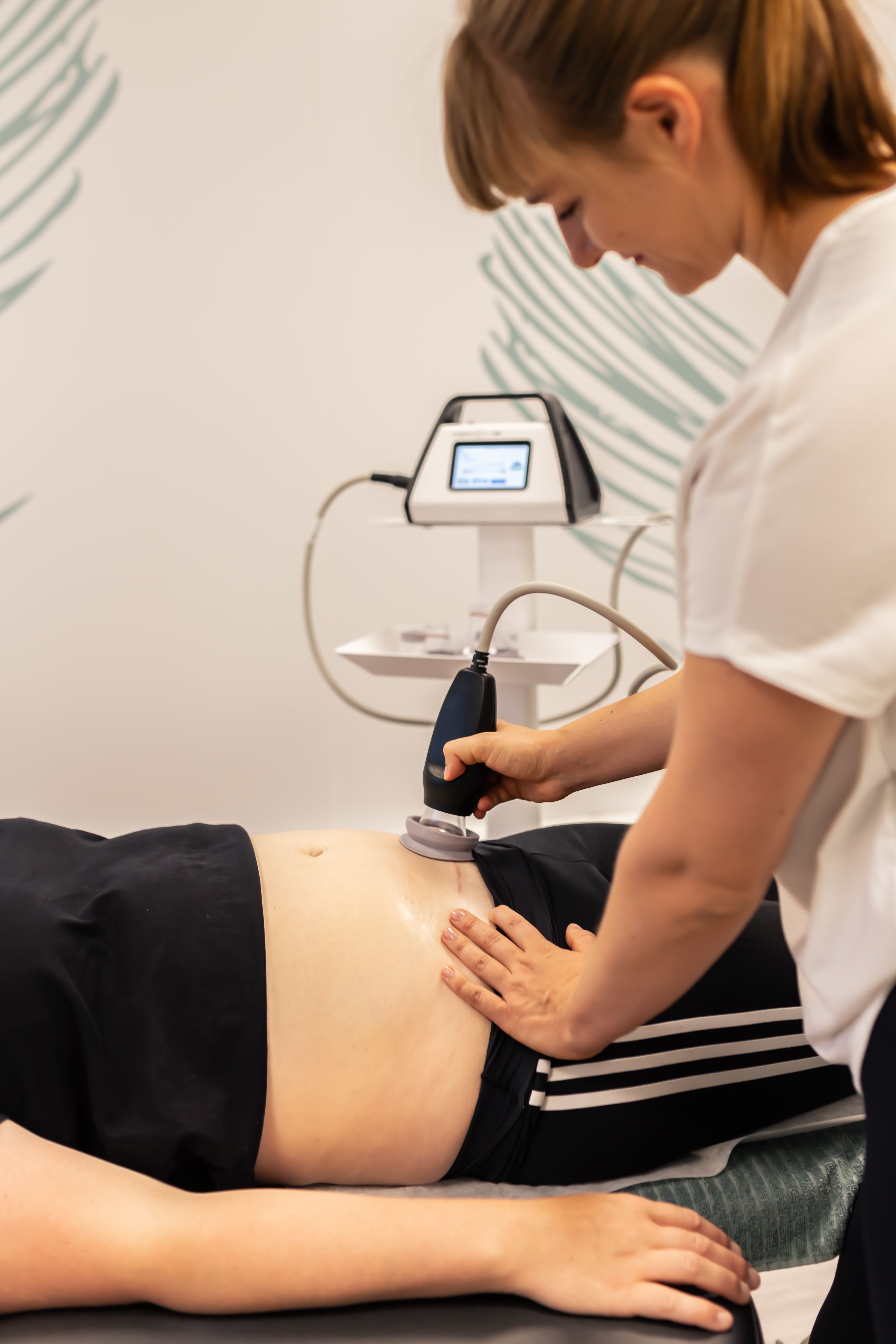
LymphaTouch was developed specifically for professional therapeutic use. Its patented technology combines precisely controlled negative pressure with high frequency mechanical vibration, independently generated within the treatment head, while treatment parameters are controlled through a modern touchscreen interface.
Negative pressure itself isn't new. Neither is vibration.
The difference is what becomes possible when the clinician can precisely control and combine them for the tissue and patient in front of them.
You may recognise this progression yourself. Some of the people at the top of your profession have travelled it too. This is where they ended up....why do you think that is?
Perhaps the question isn't whether technology should replace the therapist's hands. It shouldn't.
A better question might be:
What could become possible if you gave those hands another way to interact with tissue?
At Therapy Show this November, don't simply ask us for a product demonstration. Bring us a patient or tissue problem you regularly encounter and let's explore whether a different approach could change what you're able to do.
)
)
)
)
)
)
)
)
)
)