
Say no to fragile bones this World Osteoporosis Day
Article submitted by International Osteoporosis Foundation
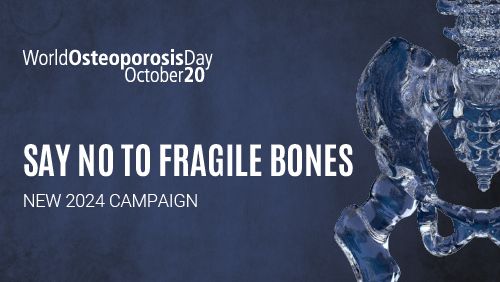
On World Osteoporosis Day, marked on October 20th each year, the International Osteoporosis Foundation (IOF) will seek to put an end to the inertia surrounding bone health by urging people of all ages to value and protect their bones.
The Campaign is amplified by IOF's 330+ national and regional medical and patient societies worldwide. Under the banner ‘Say no to fragile bones' this large global network will address the public, patients, healthcare professionals, and health authorities with three key overarching messages:
-
Our bone health is priceless
Healthy bones are at the core of our well-being, mobility, and independence. People of all ages should protect their bone health by taking early action for osteoporosis prevention through bone-healthy nutrition, regular weight-bearing physical activity, and avoidance of negative lifestyle factors like smoking.
-
Osteoporosis matters
Osteoporosis is a serious health threat with potentially devasting consequences. Recognising individual risk factors, prioritising bone health (as we do cardiovascular health!), asking for osteoporosis screening or testing upon identification of risk factors, and adhering to any prescribed medication regimen: through these strategies, we can bridge the osteoporosis care gap, safeguarding our mobility and independence as we age.
-
Make bone health a healthcare policy priority
With up to 37 million fragility fractures occurring globally each year, osteoporosis poses an enormous human and health economic burden worldwide. Health authorities must prioritise bone health in several ways, including by investing in post-fracture care coordination programmes. One fragility fracture doubles the risk of subsequent fractures – and for many patients leads to a spiral of recurring and potentially life-changing fractures, unless the underlying osteoporosis is treated. ‘Fracture Liaison Services' (FLS), services established in hospitals that see fracture patients, are a key way in which to help ensure that every fracture patient aged 50+ who presents with a broken bone is expertly assessed and treated for osteoporosis. However, the under-provision of such services in most countries of the world means that some 80% of fracture patients are not being appropriately diagnosed and treated for the underlying disorder.
As the global population continues to age, the incidence of osteoporosis-related hip fractures –is projected to double between 2018 and 2050. It is crucial that we all respond to the call for action on World Osteoporosis Day!

)
)
)
)
)
)
)
)
)
)